Urban Waterways Watch
Every Creek Is Still a Habitat.
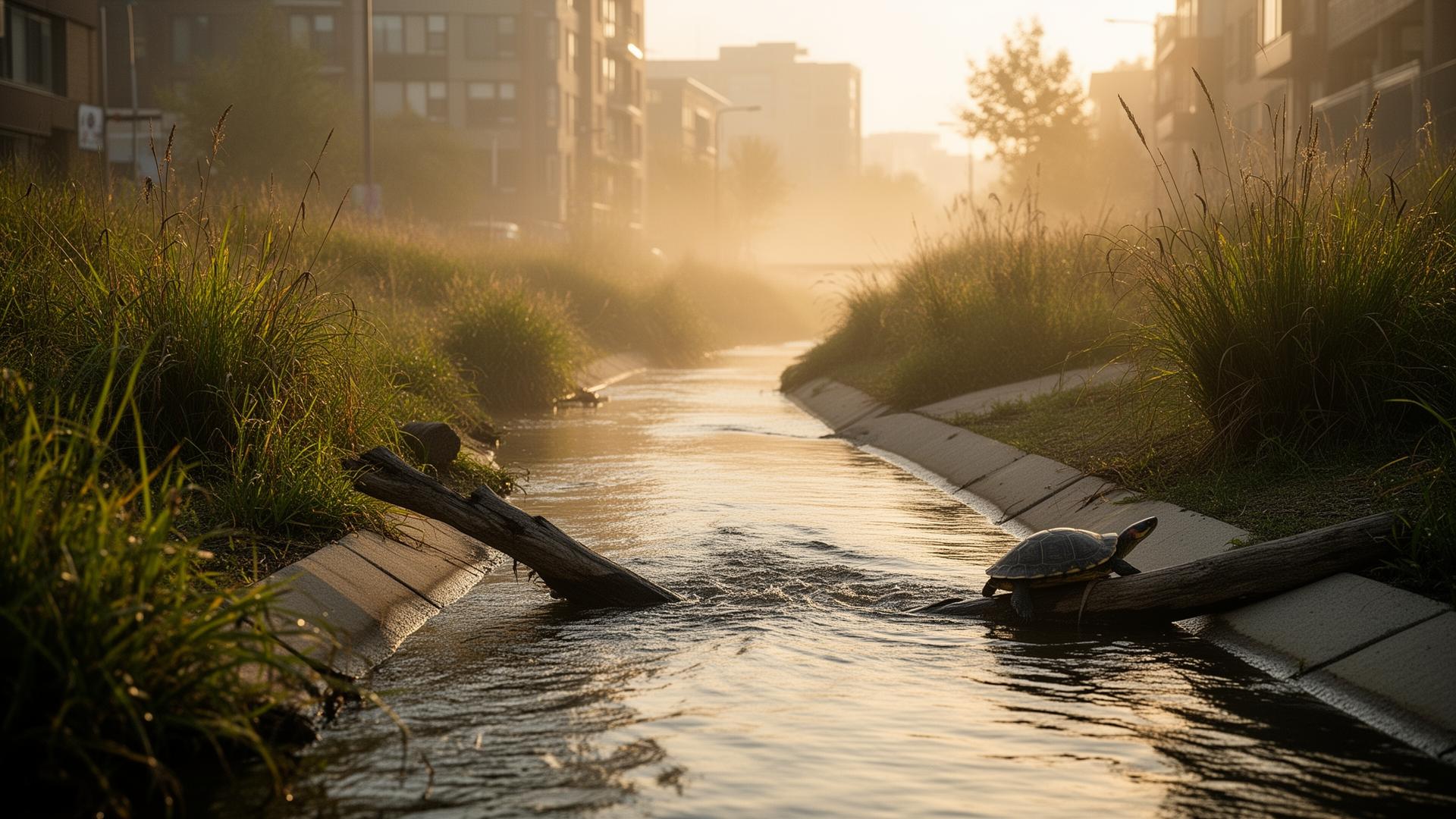
Urban waterways are not empty ditches. They are living corridors where turtles, frogs, fish, birds, insects, pollinators, raccoons, foxes, snakes, deer, and countless smaller creatures struggle to survive beside us.
Field reports on the creatures, creeks, corridors, and communities living together in the modern city.
The Living Creek
Even a small branch is a living system
A creek does not stop being a creek because concrete, trash, roads, and fences surround it.
Fish & Aquatic Insects
Minnows, sunfish, dragonfly nymphs, and caddisflies hold the base of the food web.
Frogs, Toads & Salamanders
Amphibians are early indicators of water health — their absence is a warning.
Turtles & Reptiles
Red-eared sliders, snapping turtles, and watersnakes follow even the smallest channels.
Birds & Waterfowl
Herons, kingfishers, killdeer, and ducks use creek corridors as feeding routes.
Pollinators & Native Plants
Riparian wildflowers feed bees and butterflies the surrounding city has displaced.
Mammals Using Corridors
Foxes, raccoons, opossums, and deer travel creek beds as urban wildlife highways.
Soil & Unseen Life
Fungi, worms, microbes, and root systems quietly filter what falls into the watershed.
Human Impact Reports
Field journalism from the creek bank
Sample field reports illustrating the patterns we document. Real reports will publish here as the watch network grows.
Five Shopping Carts in One Creek Branch: What Heavy Debris Does to Urban Habitat
- Location
- Willie's Branch, Austin TX
- Date
- Pilot Report
- Species / habitat affected
- Turtles, fish, aquatic insects
- Community action
- Coordinated removal + scout walk
Plastic Bags, Nesting Birds, and the Hidden Cost of Convenience
- Location
- Urban greenbelt
- Date
- Sample
- Species / habitat affected
- Nesting songbirds
- Community action
- Volunteer micro-cleanup
When Storm Drains Become Wildlife Corridors
- Location
- Drainage network
- Date
- Sample
- Species / habitat affected
- Frogs, small mammals
- Community action
- Document + partner outreach
The Trouble with Runoff After Heavy Rain
- Location
- Watershed-wide
- Date
- Sample
- Species / habitat affected
- Fish, amphibians
- Community action
- Post-storm patrol
Why Small Creek Branches Matter More Than They Appear
- Location
- Headwaters
- Date
- Sample
- Species / habitat affected
- Whole food web
- Community action
- Community walk
Urban Turtles and the Hazards of Trash-Filled Banks
- Location
- Bank zones
- Date
- Sample
- Species / habitat affected
- Turtles
- Community action
- Gentle bank clearing
Mosquitoes, Standing Water, and Broken Drainage Ecology
- Location
- Retention pond
- Date
- Sample
- Species / habitat affected
- Amphibians, insects
- Community action
- Report blockage
Greenbelts as Last Refuge: Wildlife in Fragmented Cities
- Location
- Greenbelt edge
- Date
- Sample
- Species / habitat affected
- Mammals, birds
- Community action
- Stewardship watch
Creature Focus
A recurring close look at our urban neighbors
Each focus answers the same six questions, so volunteers know how to help without harming.
Turtle Watch
Frog & Toad Watch
Bird Nesting Watch
Pollinator Watch
Creek Mammal Watch
Fish & Aquatic Life Watch
Native Plant Watch
Invasive Species Watch
Every Creature Focus answers
- What the creature needs
- What urban conditions threaten it
- What cleanup teams should avoid disturbing
- What volunteers can document
- When to call wildlife professionals
- How to help without harming
Field Notes from the Creek
A community journal of what we see
Volunteers, scouts, and cleanup teams will be able to submit observations here.
Submit a Field Note
Coming SoonFuture submission form will include:
- Observer name
- Date
- Location
- Waterway name
- Wildlife seen
- Trash or hazard observed
- Photos (upload)
- Weather conditions
- Water condition
- Urgency level
- Notes
Observe
Slow down. Watch what moves, what's still, what's missing.
Document
Photos and notes turn a walk into data the community can use.
Locate
Pin the spot. Patterns emerge when notes cluster on a map.
Share Responsibly
Sensitive locations (nests, dens) stay private to protect wildlife.
RiverKeepers-Style Stewardship
Local people watching over local waters
Clean It Up! is inspired by the RiverKeepers idea of neighbors becoming caretakers of the waterways that run through their communities.
Practice 1
Observe regularly
Practice 2
Document responsibly
Practice 3
Clean safely
Practice 4
Protect wildlife
Practice 5
Report hazards
Practice 6
Partner locally
Practice 7
Restore native habitat
Practice 8
Educate the community
Practice 9
Return and re-check
“We are not just cleaning around nature. We are learning to live responsibly within it.”
Urban Green Space Ecology
Green spaces are not decorations. They are living infrastructure.
The role parks, greenbelts, and creek corridors play in a healthy city is far larger than what we see on the surface.
Water filtration
Flood mitigation
Wildlife corridors
Shade & heat reduction
Mental health & beauty
Soil stability
Pollinator pathways
Community gathering
Children's outdoor learning
Neighborhood resilience
Safety & Ethics
What cleanup teams should know
Stewardship means leaving wildlife and habitat better than we found them — and keeping volunteers safe.
Do not disturb nests, dens, eggs, or burrows.
Do not handle wildlife unless properly trained.
Watch for snakes, insects, unstable banks, broken glass, sharp metal, contaminated water, and hidden holes.
Report injured animals to appropriate wildlife rescue groups.
Separate cleanup activity from habitat restoration activity when needed.
Avoid removing natural woody debris unless it is clearly hazardous or human-discarded material.
Photograph and document sensitive areas before disturbing them.
Work with local experts when possible.
Report a Concern
Tell us what you're seeing
A coming reporting tool will route concerns to the right partners. Community reports help us build a clearer picture of the watershed.
Educational News Desk
A neighborhood newsroom for the watershed
A planned layout for ongoing field journalism, alerts, and community voices.
Featured Story
Latest Field Reports
Creature Focus
Before & After
Community Alert
Volunteer Spotlight
Partner Expert Commentary
Youth Learning Corner
Young Creek Keepers
A learning corner for schools, families, churches, and youth groups
Helping young people see that even a small creek branch is part of a larger living system.
What lives in a creek?
Lesson card coming soon.
Where does stormwater go?
Lesson card coming soon.
Why does litter hurt animals?
Lesson card coming soon.
How do trees help water?
Lesson card coming soon.
What should I never touch?
Lesson card coming soon.
How can my class help?
Lesson card coming soon.
“Urban waterways are living classrooms, wildlife corridors, stormwater systems, and neighborhood mirrors. When we clean them, we are not just removing trash. We are restoring relationship.”